

Welcome to the Data & AI Marketplace
A One Stop Shop to serve high quality Data & AI assets with integrated Governance.
Redesigning enterprise data discovery for leadership decisions at a 700K-person company
TL;DR
Accenture’s Data & AI Marketplace is where teams across 15 countries find, publish, and govern enterprise data. Department heads used it to pull the data they presented to the C-suite. The goal was to modernize a legacy platform and make it ready for AI. I was the sole designer on the MVP, then we redesigned the core flows and design system and designed AI-powered discovery.
Organization
Accenture Song
Role
UX Designer
Duration
6 months
Team
2 UX Designers, 1 Design Manager
Tools Used
" width="16px"><path d="M 0 4 C 0 1.791 1.791 0 4 0 L 8 0 L 8 4 C 8 6.209 6.209 8 4 8 C 1.791 8 0 6.209 0 4" fill="rgb(36, 203, 113)" height="8px" id="Z88x9hUqt" transform="translate(0 16)" width="8px"/><path d="M 0 0 L 0 8 L 4 8 C 6.209 8 8 6.209 8 4 C 8 1.791 6.209 0 4 0 Z" fill="rgb(255, 114, 55)" height="8px" id="UOkfCEX25" transform="translate(8 0)" width="8px"/><path d="M 0 4 C 0 1.791 1.791 0 4 0 C 6.209 0 8 1.791 8 4 C 8 6.209 6.209 8 4 8 C 1.791 8 0 6.209 0 4 Z" fill="rgb(0, 182, 255)" height="8px" id="MDL1yCl6y" transform="translate(7.967 8)" width="8px"/><path d="M 0 4 C 0 6.209 1.791 8 4 8 L 8 8 L 8 0 L 4 0 C 1.791 0 0 1.791 0 4" fill="rgb(255, 55, 55)" height="8px" id="kjJWh010k" width="8px"/><path d="M 0 4 C 0 6.209 1.791 8 4 8 L 8 8 L 8 0 L 4 0 C 1.791 0 0 1.791 0 4" fill="rgb(135, 79, 255)" height="8px" id="NT8t6No0E" transform="translate(0 8)" width="8px"/></g></svg>)
" height="24px" id="hhxCvRhyo" width="24px"/><path d="M 4.73 10.065 L 3.413 10.065 C 1.425 10.065 0 8.847 0 7.065 L 7.085 7.065 C 7.452 7.065 7.69 7.325 7.69 7.695 L 7.69 14.825 C 5.918 14.825 4.73 13.39 4.73 11.391 Z M 8.23 6.522 L 6.912 6.522 C 4.925 6.522 3.499 5.326 3.499 3.544 L 10.584 3.544 C 10.951 3.544 11.211 3.783 11.211 4.152 L 11.211 11.282 C 9.439 11.282 8.23 9.847 8.23 7.848 Z M 11.75 3 L 10.433 3 C 8.446 3 7.02 1.783 7.02 0 L 14.105 0 C 14.472 0 14.71 0.262 14.71 0.61 L 14.71 7.739 C 12.939 7.739 11.75 6.304 11.75 4.305 Z" fill="rgb(255, 255, 255)" height="14.825000057220459px" id="eyJC7LIIx" transform="translate(4.321 5.369)" width="14.709999980926515px"/></svg>)
" height="24px" id="sCCfSWghB" width="24px"/><path d="M 12.638 8.911 C 8.599 6.958 7.419 6.666 5.718 6.666 C 3.721 6.666 2.019 7.497 0.499 9.831 L 0.249 10.213 C 0.045 10.527 0 10.639 0 10.774 C 0 10.909 0.068 11.021 0.318 11.178 L 2.882 12.772 C 3.018 12.862 3.132 12.907 3.245 12.907 C 3.381 12.907 3.471 12.839 3.608 12.637 L 4.016 12.009 C 4.651 11.043 5.219 10.729 5.944 10.729 C 6.58 10.729 7.329 10.909 8.259 11.358 L 10.936 12.615 C 11.208 12.749 11.503 12.682 11.64 12.368 L 12.91 9.585 C 13.046 9.27 12.956 9.068 12.638 8.911 Z M 0.862 3.995 C 4.901 5.948 6.081 6.24 7.782 6.24 C 9.779 6.24 11.481 5.41 13.001 3.075 L 13.251 2.694 C 13.455 2.379 13.5 2.267 13.5 2.132 C 13.5 1.998 13.432 1.885 13.182 1.728 L 10.62 0.135 C 10.483 0.045 10.37 0 10.256 0 C 10.12 0 10.03 0.067 9.893 0.27 L 9.485 0.898 C 8.85 1.863 8.282 2.178 7.557 2.178 C 6.921 2.178 6.172 1.998 5.242 1.548 L 2.564 0.293 C 2.292 0.158 1.997 0.225 1.861 0.54 L 0.59 3.322 C 0.454 3.636 0.545 3.838 0.862 3.995 Z" fill="rgb(255, 255, 255)" height="12.906999889373783px" id="oO8sx1YmD" transform="translate(5.25 5.55)" width="13.4999999932169px"/></svg>)
// IMPACT

%
Increase in data discoverability

%
Higher CSAT after the role-based chat launched

%
Reduction in manual errors through automation
// WHAT I SHIPPED
The redesigned marketplace at a glance

250+ Frames redesigned
100+ Design system components
15+ Forms and wizards
Chat Role-based support
Dashboards Data visualization

// USER PROBLEM
Users couldn’t find the data they used every week.
Finance, HR, Sales, and IT leads used the platform daily to make decisions. It had grown cluttered and rigid. Search needed exact dataset names, the homepage looked the same for every role, and nothing remembered what you used last week.
“I use the same datasets every week, but I have to search for them every single time.”
P3 · Daily user · Stakeholder interview
“Honestly, I skip most of this. I don’t even know what I’m looking at sometimes.”
P15 · Daily user · Stakeholder interview
Heuristics and Accessibility Issues that surfaced during initial research.
// THE CHALLENGE
Designing for users who were also the stakeholders
The product leads who set the platform’s direction were also using it every day to make decisions. So every change had to solve their pain points and hold up against their business goals.
The approach
A phased strategy
I advocated for solving urgent usability issues inside the MVP first, then rebuilding the foundation, then designing for AI.
01 / MVP & iterative discovery
Shipping quick UI fixes within MVP limits
As the sole designer on the MVP, I used it as a sandbox for discovery. I shipped quick UI fixes in two-week sprints with PMs and developers, and used what I learned to shape the full redesign.
“Can we explore a way to make support more self-service?”
Request from PM
Role-based chat: Answers personalized by user type
CSAT +25%
Static FAQs and wizards were rigid, hard to update, and gave every user the same answer. So I proposed a chat that answers by role, across the three main user types, with guided flows to cut clutter. A static FAQ would have been faster to ship, but a chat could scale into the personalized platform we were building toward.

02 / Rebuilding the foundation
Redesigning full pages for clarity and scale
The MVP showed the gaps were structural, so fixes alone wouldn’t hold. We redesigned full pages, starting with the ones people opened every day.
Homepage: Sections tailored to each role
Every role saw the same static cards and no clear next step. So I removed the irrelevant modules, clarified the CTAs, and tailored sections by role.

Legacy homepage
Product card: Access status and key metadata at a glance
Cards had unused review stars and decorative icons, but no access status. So I cut them, standardized the CTA, and added access status, bookmarks, and notifications.

Before

After
My Assets: Every published and favorited dataset in one place
People searched from scratch for data they used every week. So I added My Assets: one place for everything you’ve published or favorited.

03 / Integrating AI
Reworking system logic for AI-ready discovery
The platform was losing users and backend upgrades would take time. So we shipped AI-ready versions of search and the homepage, and designed the GenAI future state alongside them.
Natural language search: Finding datasets without knowing their exact names

LEGACY
Exact dataset names only, so discovery broke easily.
REDESIGNED
Tag-enhanced filters and helper text to cut failed queries.
FUTURE STATE
A GenAI assistant for conversational queries and tasks like requesting access.
Dynamic homepage cards: Content tailored by role, behavior, and usage

LEGACY
Static “popular this week” cards for everyone.
REDESIGNED
Role-based collections by department, like Finance.
FUTURE STATE
Cards tailored by role, past usage, company events, and search behavior.
// DESIGN SYSTEM
Standardizing components across the Data & AI Studio
Teams across the Data & AI Studio were on inconsistent systems. I worked with global teams on one responsive, accessible system that became the foundation for the Accenture Design System Playbook.

// HOW I WORKED
“She possesses a profound understanding of user requirements and business goals, translating them into aesthetically pleasing designs.”
Vaibhavi Thakkar · Application Development Associate Manager
“Manya expertly dealt with conducting user research including interviews, focus group discussions, heuristic analysis, and more.”
Faizah T · Designer & Researcher
// REFLECTION
What I learned
Less is more
In enterprise UX the hard part is simplifying what exists. Stakeholders will always ask for new features. The value is in removing, consolidating, and fighting for what matters to users.
Stakeholders speak different languages
I learned to translate UX findings into the business metrics each leadership group cared about.
Want To Know More?
Due to NDA restrictions, the visuals from my work at Accenture are limited and masked. Feel free to reach out for more details.
Up Next

Centralizing the design system for enterprise
50% reduction in redundant components
Design tokens
Component library
Light & dark modes

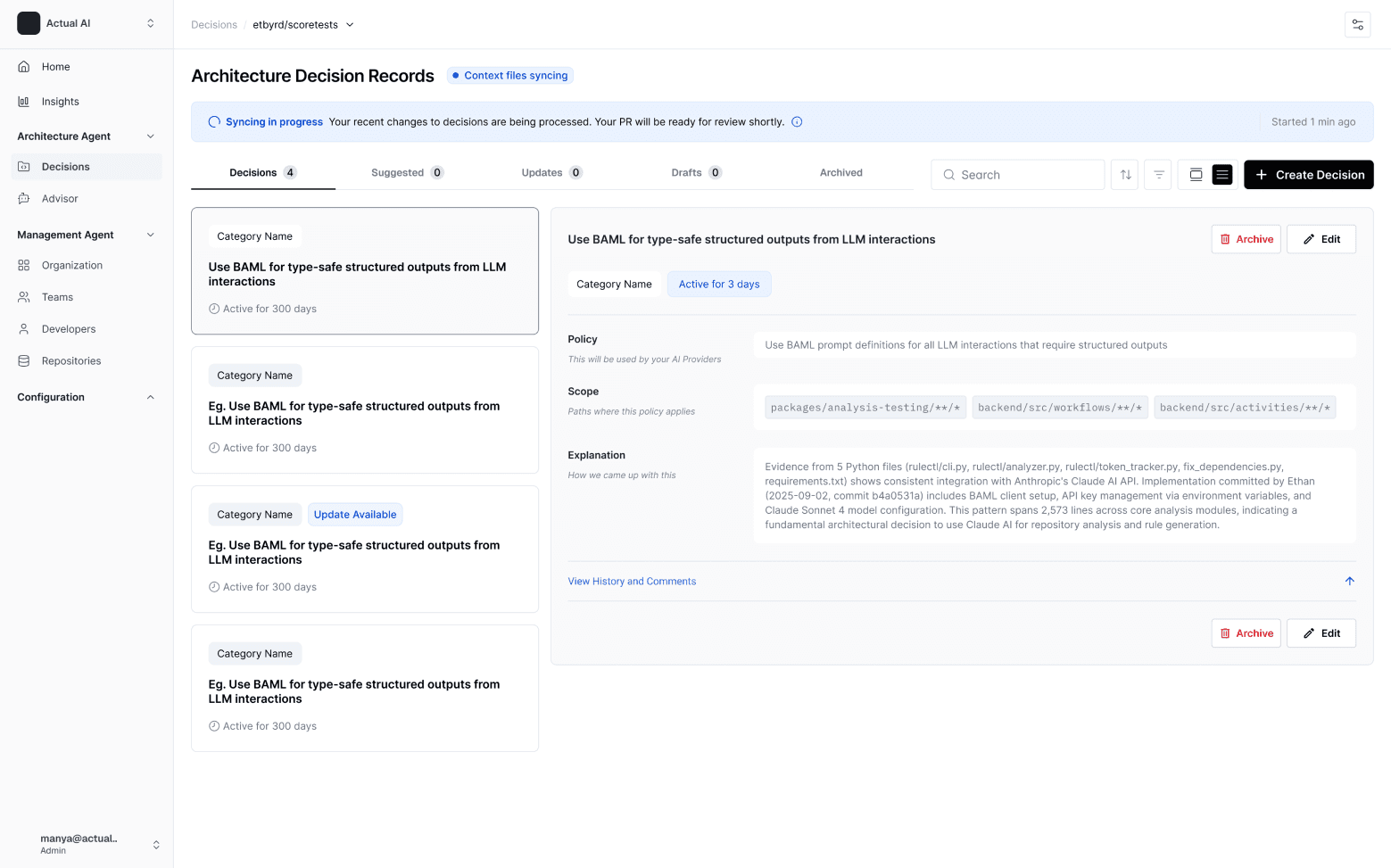


Context management system for AI powered dev teams
Reduced onboarding drop-off by 30%
Developer tools
Agentic UX
0→1
Early-stage startup
Welcome to my garden, where most of my ideas start.